Showing posts with label 25 Books in 2013. Show all posts

Monday, December 30, 2013

The 2014 Bookshelf Challenge!

Not my room, sadly, but definitely my dream wall.

Back in January of this year, I posted that I was going to make a serious effort to make it to 25 books in 2013. And... I ended up making it to 55! I was posting on each of them here for a while, and then gave up because my reading was getting far ahead of my posting (I'll post the complete list below). I read more new books than I think I've ever read, constantly putting holds on books at my library when they were just mentioned in "upcoming releases" in book sections of papers and buying new books at the bookstore (THAT is an addiction I've had for years).

But through it all, I stared at the bookshelves surrounding me — and as many of you know, I'm literally surrounded by bookshelves when I sit here at my desk; they form a wonderful semicircle around me — and realized I wasn't making a dent on any of them. There are favourite books I'd like to read again, but have been so caught up in reading everything else that I just don't attack the ones on the shelves. In recent years I'd buy new books I'd read about in the paper or through friends, but they'd be shelved because I was working on a Finding Lost book or too busy trying to bomb through a TV series to get to it. (By the way, my TV viewing was seriously lacking this year, and yet I still felt accomplished having read all these books instead.)

My best friend Sue has the same issue; volumes of books piling up around her while she's taking out stacks of books from the library or borrowing books from me or buying new books because of the various book clubs we're in.

And so, a few weeks ago, we were discussing this conundrum, and I suggested we take on a challenge in 2014: no library books, no new books (unless someone else buys them for us). No. We can only read the books on our shelves.

Of course, there are exceptions. I put a hold on one library book when I first heard about it, and then it won a kajillion awards and now has hundreds of holds on it, but I'm right near the top. So we agreed I could keep that hold. She has a hold at the library she's going to keep, too. And of course we're both in a graphic novel book club and a second book club, ones that obviously recommend books we don't already have. So we can buy those books or get them from the library. But for personal reading, which accounted for 70% of my reading this year, we have to stick to what we've got.

If anyone else wants to join in, we'll be posting at the end of every month (when we remember to) what we read this month and how much we've conquered from our bookshelves. I'm very excited. As I told someone the other day, I have a book I bought in grad school that I moved from that room to my first apartment, second apartment, first house, second house, and now third house, and it's STILL THERE and I have never read it. I alphabetize my bookshelves (stop laughing; at least I don't organize them by font), and it's always the first one I put up there, which is why it haunts me. It's Peter Ackroyd's English Music, and dammit, I will read that book this year! God, I hope it doesn't suck.

And now, here are the books I read in 2013. I've put a star beside my very, very favourite ones. Let me know what your favourites were that you read this year!

1. Marbles by Ellen Forney
*2. Cloud Atlas by David Mitchell
3. Skim by Mariko and Jillian Tamaki
*4. My Name Is Mina by David Almond
*5. When God Was a Rabbit by Sarah Winman
6. Underwater Welder by Jeff Lemire
*7. Blankets by Craig Thompson
8. Midnight's Children by Salman Rushdie
9. Habibi by Craig Thompson
10. Skellig by David Almond
11. Th1rteen R3asons Why by Jay Asher
12. Marvel 1602 by Neil Gaiman
13. Divergent by Veronica Roth
14. Ghost World by Daniel Clowes
15. The Last Girlfriend on Earth by Simon Rich
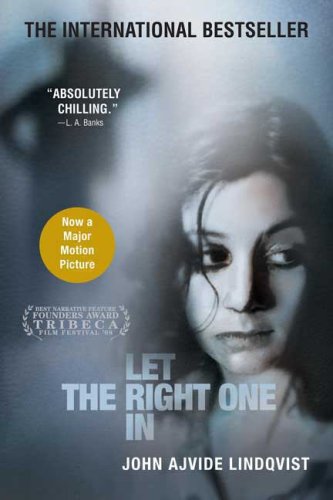
*16. Let the Right One In by John Ajvide Lindqvist
17. Supergods by Grant Morrison
18. The Silent Clowns by Walter Kerr
*19. Memoirs of an Imaginary Friend by Matthew Dicks
20. All-Star Superman by Grant Morrison and Frank Quitely
21. Red Son by Mark Millar et al
22. Life After Death by Damien Echols
*23. Sweet Tooth by Ian McEwan
24. Hyena in Petticoats by Willow Dawson
25. Brain on Fire: My Month of Madness by Susannah Cahalan
26. Fables: Legends in Exile by Bill Willingham
27. A Visit from the Goon Squad by Jennifer Egan
28. The Amazing Adventures of Kavalier and Clay by Michael Chabon
29. The Escapists by Brian K. Vaughan
30. Fables: Animal Farm by Bill Willingham
**31. Tenth of October by George Saunders
32. Eternal Life by John Shelby Spong
33. Jinn Warriors by Marwan El Nashar
**34. Where Did You Go, Bernadette? by Maria Semple
*35. Wool by Hugh Howey
36. The Ocean at the End of the Lane by Neil Gaiman
37. The Bell Jar by Sylvia Plath
*38. Blacksad by Juan Diaz Canales and Juanjo Guarnido
39. The Demonologist by Andrew Pyper
*40. Wonder by R.J. Palacio
41. Out of My Mind by Sharon M. Draper
42. Green River Killer by Jeff Jensen and Jonathan Case
43. Dear Girls Above Me by Charlie McDowell
44. Jim Henson: A Biography by Brian Jay Jones
*45. The Blondes by Emily Schultz
46. Me Before You by Jojo Moyes
47. Empty Cradle by Diana Walsh
48. Hamilton Illustrated by David Collier
49. Haunted Hamilton by Mark Leslie
**50. Game of Thrones by George RR Martin
51. Perfect by Rachel Joyce
52. Fangirl by Rainbow Rowell
53. Saga (vol 1) by Brian K. Vaughan
**54. Eleanor & Park by Rainbow Rowell
55. I Am Malala by Malala Yousafzai with Christina Lamb

Saturday, October 19, 2013

Books in 2013: #25-30

OK, I'm now on my 40th book of the year, and realized that I've only listed up to 24 (and that was way back in August or something). So now... short reviews of each book, just so I can begin to catch up. Here we go!!

#25 Brain on Fire: My Month of Madness by Susannah Cahalan
This one came as a recommendation from many friends, and it's a truly fascinating account of the author, at age 26 in 2009, suddenly descending into what appears to be insanity, and just as she was about to be committed to a mental institution because of her screaming, moaning, vegetative states, a doctor was called in who spent a couple of hours with her, did a few tests, and discovered that a part of her brain was off-kilter. Two months later, she was back to living a normal life. It's a fascinating book, one I can't stop thinking about, and I very highly recommend it. Interestingly, the doctor who ultimately gives the correct diagnosis passes a piece of paper over the desk to her at one point and asks her to draw a clock, and she fills in the clock with all the numbers shuffled off to one side, even though to her, it looks like a normal clock, and that's the trigger that tells him what's wrong. I read this, and a couple of weeks later the episode of Hannibal aired where Hannibal got Will to do the same thing, and Will also bunched the numbers on the one side of the clock, letting Hannibal know exactly what was wrong with him (if I'm right, he also describes it as Will's brain being on fire). It made me wonder if Bryan Fuller had also read this book.


#26 & 27 Fables: Legends in Exile & Fables: Animal Farm
I'd been told by various graphic novel readers that I really needed to check out the Fables series; but I'd also read things saying that Fables was the sort of book that non-graphic novel readers who pretend they love graphic novels read... along with things like Scott Pilgrim. (Probably written by comic-book snobs, and by the way, Scott Pilgrim is FANTASTIC.) So I finally picked it up, and while I'd say the plot is a little lightweight, it's still a pretty good and fun read. Much like on Once Upon a Time, the characters are fairy tale creatures who've found their way into our world after a huge coup d'état in fairy-tale land that ousted them, but they live in secrecy. Creatures who look human (like Snow White and Little Boy Blue) can live amongst us, but those who don't (like the Three Little Pigs or the Gingerbread Man) live in a little hidden fairy-tale land in the forest in upstate New York. The first one was pretty good, if the story was a little banal (Snow White, who's the badass ruler, discovers her sister Rose Red has died and needs to get to the bottom of it) but the second one, Animal Farm was much better, when Snow goes up to do her annual check on the non-humanoid fairy-tale creatures and discovers a revolt in progress, where the characters are sick and tired of being exiled to this particular area. It was fabulous, and made me want to move onto the third, which I've just started reading.

#28 A Visit from the Goon Squad by Jennifer Egan
This is one I'd had my eye on for a long time. Goon Squad is a Pulitzer-Prize-winning novel by the amazing Jennifer Egan, which is effectively a bunch of connected short stories that all tell one long one. There's the record company executive who's past his prime but still trying to find the next best thing; his former assistant; and their friends and family. The story moves into the past, present, and future of the novel's writing, but along the timelines of the people, and by reading it all the way through you really get a sense of the story of these people. There was one section about a filial connection that comes so quickly and wallops you without warning, and I was instantly in tears, and that one moment really stuck with me and coloured the rest of the book (in a really good way). The end of the book looks into a not-too-distant future, where children are all connected to various tablets right from infancy, yet the world still finds a way to connect face-to-face. A brilliant book.

#29 The Amazing Adventures of Kavalier & Clay by Michael Chabon
This is one of those books I've had for years, ever since it was actually first released, but then the Finding Lost series got in the way, and during the years of writing that series, I barely saw any TV or read any books that weren't connected to Lost in some way, so this is one of those books that I kept starting and restarting, but had to stop to let another book project get in the way instead. So I finally got to read it when it was suggested for my graphic novel book club (hey, check it out, this is the first one on the list that's a book club pick!) I LOVED this book, even though many members of the book club didn't. It's a thinly veiled account of the creators of Superman (even though Siegel and Shuster actually exist independently in the book as Kavalier and Clay's chief rivals), told from Kavalier's origins as a refugee from Hitler's Nazis, through to joining forces with his cousin and creating The Escapist, a Houdini-like superhero who uses his powers of escapism to help the downtrodden and persecuted. Other members of our group didn't love the digressions the story took when it left NYC and the actual comics, but I thought the book was a fascinating look at expats during the Second World War, and what they had to go through as they left their families behind in an attempt to make a new life for themselves. And, of course, of the Golden Age of Comics. Great book.

#30 The Escapists by Brian K. Vaughan
This was the companion book to the previous one; in the book club we were asked to not only read Chabon's book, but one of two graphic novels that have been written to go with it. I thought I had bought the one that was actually artistic renderings of the stories that Kavalier and Clay shape and talk about in Chabon's book, but I'd bought the other one; BKV's sequel of sorts, where in the 21st century three young people buy the rights to Kavalier and Clay's Escapist character and try to bring him back to life with their own comic skills. I thought the book was a little dull, and too much of a love letter to Chabon (with Chabon's introduction being too much of a love letter to BKV) and even though I'm a huge, huge fan of BKV, this is not one of his better efforts. I went back and bought the other one, so I'll read that.

I shall halt there, and list the next bunch soon. Whew, that's caught us up soon! What sort of books have you guys been reading lately? Anything you can recommend to me?

Thursday, September 05, 2013

Books in 2013: #24 Hyena in Petticoats by Willow Dawson

Another graphic novel book club pick, Hyena in Petticoats is an historical graphic novel detailing the life of Nellie McClung, Canada's pioneer in the women's suffragette movement. McClung is a fascinating character whom most Canadians probably only know from those infamous 1990s Canadian Heritage Minute commercials:


I fortunately had great Canadian history teachers in school who covered McClung extensively, so I knew quite a bit about her, especially that wonderful mock Parliament that they show in the commercial above.

Dawson's book covers all the major points of her political career: her attempts to be heard, gathering various other strong women together who believed in the right of women to vote, her difficulties with the Premier, and her ultimate victory. In our graphic novel group discussion, many of the other participants didn't like Dawson's illustrations, but I love them. The square heads and round rosy cheeks are very specific to Dawson's style, and I think she's an immensely talented artist and writer. However, I thought the story itself was a little bland, and when I was reading it I wondered if maybe it was more suited to a younger readership. It was with much satisfaction that I turned it over at the end and realized it's in Penguin's Puffin series, meaning it was intended for younger readers. In that case, I think it's the perfect book to hand off to my daughter when she's about 10. One nitpick: I'm not sure what kind of personal autobiographical information is available on McClung, but where Dawson goes over in detail the historical side of McClung, she glosses over very quickly some shocking moments, such as, "And then her husband was put in a sanatorium..." "And then her son killed himself..." When those moments happened (usually shown as a single frame with no more explanation) I couldn't help but think, "What?! What happened to her son? How did that affect her?" But alas, there was nothing more. I'm unsure of whether it was omitted because of a dearth of detail about anything surrounding the afflictions, or if Dawson was asked to pare that material down for a younger readership?

In any case, the pictures are delightful, the story is a good one to pass on to a younger generation, and this is great subject matter. Note to the publisher: publish Dawson's work in full colour! In colour, her pictures are even more glorious than they are in black and white.

Friday, August 30, 2013

Books in 2013: #23 Sweet Tooth by Ian McEwan

Another book club pick, Sweet Tooth was recommended by my best friend, who is a huge Ian McEwan fan. I haven't actually read much of his stuff; back in university I read First Love, Last Rites after my British Lit prof suggested it. I enjoyed that one immensely, but not so much Black Dogs, which I later read, and which was too political for my tastes. I have a couple others, but haven't read them.

After this one, however, I'm going to make those others a priority.

This is the story of a woman who becomes an MI-5 agent in the UK in the 1970s, and what happens when she's put undercover in an operation where she has to bring on board a left-wing writer who will write certain material that will be beloved by the public and push a certain agenda that the government wants pushed. But it's what happens during said operation that becomes the crux of the book — her relationship with the writer, her relationship to the agency, and her relationship with a previous lover.

I particularly loved the 1970s setting, because I was a toddler in the 1970s and wouldn't remember anything political at that time, and in the 1980s I just remember vaguely the notion of the Cold War and Thatcherism. In this book you see the beginnings of all of that, and when Thatcher died and so many people came down so hard on her, my husband was one of the few who said, "Actually, maybe people should take a look at the England she came into, and what she was forced to try to fix. The country was deadlocked and not even working, and while yes, she broke unions and didn't make any friends on the left, she actually got things running again." I never gave much credence to what he said (I'm pretty left and he's pretty right and, well, we just seem to be living proof of opposites attracting in that sense), this book certainly made me rethink what he said. Not reevaluate, but certainly rethink.

I thought the ending was particularly fun, and I will say I thought a few times that I could see exactly where the storyline was going before it did an about-face and I was proved completely wrong.

Wednesday, July 31, 2013

Books in 2013: #22 Life After Death by Damien Echols

In 1996, my university buddy and I went to the Bloor Cinema to see a documentary called Paradise Lost. We knew absolutely nothing about the film going in, but this was our Masters year of university, and when we weren't sitting in the library, we were sitting in the Bloor Cinema in Toronto. Two hours later, we came out of that theatre, changed forever.

Paradise Lost is a documentary about the murder of three young boys in West Memphis in 1993 — Steve Branch, Michael Moore, and Christopher Byers. (Warning for anyone watching the movie: they show video of the corpses the way the police found them, and that image is forever seared onto my brain.) The police were under a LOT of pressure to put away the killers, and so they immediately pinned it on three teenagers who were known to listen to heavy metal music and wear Goth clothing (they HAD to be the perpetrators, right?) Jessie Misskelley Jr. was the outsider of the three, a young man with a very low IQ who the cops took into a separate room, grilling him for hours and hours with no food or water until he was so confused and upset he confessed to everything and agreed that the other two young men — Damien Echols and Jason Baldwin — had been involved. It didn't matter that he barely knew them, or that Echols and Baldwin weren't even in the vicinity at the time, or that witnesses had never seen them in the area, or that other people had stepped forward to mention who they HAD seen in the area. Damien Echols was the kid in long black hair, trenchcoat, Doc Martens, and pentangle etched onto the back of his hand who listened to The Cure and Metallica. (In other words, fitting the description of most of the guys I hung around with in high school.) Jason Baldwin had the mullet and Metallica shirt, and was Echols' best friend. The trial was swift, and the boys were convicted: Baldwin and Misskelley were given life in prison, and Echols was sentenced to death.

And then the documentary came out, and outrage was immediate. It showed the trial, and the ineptitude of the police force. After I saw it, I became obsessed with the case of the West Memphis Three, as they were now known. I came home late that night from the film and went onto the website, reading everything I could about what had happened since the events of the film had taken place and there was SO much more to the story already. I was eager to know more about Damien Echols, the most charismatic of the bunch, who had been given the death penalty. Within days I contacted their supporters through the website, and they wrote me back. I donated money to the fund to have the case reopened. I bought a shirt that said "Free the West Memphis Three" and wore it all the time, constantly telling people about the case and how they could help. I didn't, for a second, believe these young men had done it. Three little boys died that day, molested, mutilated, and brutally murdered, and their killer was walking free while these three young men were sitting in jail.

The second documentary was released, wherein the documentary filmmakers shone a spotlight on the stepfather of Christopher Byers, making him look like a lunatic and a possible suspect. Byers, who had been an outspoken advocate for the conviction of the West Memphis Three (in the first movie, he's batshit insane, and in the second he's worse) suddenly realized what it felt like to be wrongly accused, and by the third movie he'd changed his tune and was advocating for the release of the men. Only near the end of that one did they suddenly suggest perhaps it was the stepfather of another of the boys who had done it, and to this day he looks like the most likely, but of course the case can't be reopened.

Here's the catch: in the state of Arkansas, they have never, EVER overturned a conviction on the basis that they were wrong. Ever. So, after so much public outcry and the obvious wrongfulness of the conviction, the state of Arkansas approached the West Memphis Three and gave them an out: if you admit that you were guilty and did it, we can put on paper that you admitted to the crime, and we'll let you go.

It was over 18 years after these men had been put in prison. Their late teens, entirety of their twenties, and majority of their thirties had been spent in prison. Jason Baldwin was studying to be a lawyer, and was hoping to have the charge overturned, which would allow him to actually practice so he was reluctant to do this. Jessie Misskelley was basically willing to go with whatever the other two did. And Damien Echols, the poet, the philosopher, the most famous of the bunch, watched his execution date loom and begged Jason to change his mind. Jason did, they admitted to it, and Damien, who had been in a closed cell for over a decade, never being allowed outside, saw the sun for the first time in 10 years.

But they'll never truly be free. Their best years were taken from them. Celebrities who had taken on the case like Johnny Depp and Eddie Vedder and the members of Metallica and Marilyn Manson were now buddies with Echols, but it was going to take a long time for him to find any sort of peace. (A woman who saw the 1996 documentary began writing to him in prison, and they were married three years later; she eventually became the main supporter of the three men, and it's mostly due to her efforts that they were freed.) Jason is hoping to do pro bono legal work for the wrongfully accused, but because of his conviction and official admission of guilt it likely won't happen. And Jessie Misskelley is holed up in a house with no phone and has no contact with the outside world. They destroyed him. In a way, they destroyed all of them.

And those three little boys, who would now be in their early twenties, are still dead. And their killer walks free.

I've read a book on the case (called Devil's Knot), and every article I could get my hands on. And finally, Damien Echols wrote his own memoir on it, which brings us (FINALLY) to the 22nd book I've read this year, the aptly titled, Life After Death. This book is Damien's account of his very troubled upbringing, the abject poverty he and his family encountered, his struggles to find normalcy in a distant family that showed him very little love and affection, and how he was pinpointed as the fall-guy for this horrible crime. The section of the book covering his time in prison is often written in the present tense because they're taken from his actual diaries kept while in there, so they are raw, angry, and truly painful to read. There are times when the writing is a little laboured (where as an editor I could see where his publisher had asked him to create a segue that wasn't originally there), but his passion comes through, and the book is formatted beautifully, in a non-linear style that jumps back and forth between his time in prison, and looking back on the years that led up to his incarceration. Every once in a while he writes something that is so pure, so beautiful, it cuts right to the core. Such as when he talks about the difference between the first place he was incarcerated and the second: "Jail is preschool. Prison is for those earning a Ph.D. in brutality."

Or this devastating answer to the oft-asked question when he was still locked up, "What do you miss the most?"


...a hundred things flash through my mind—the memories giving me that free-fall feeling in the pit of my stomach. I miss the rain. I miss standing beneath the sky and looking up at the moon and stars. I miss the wind. I miss cats and dogs. I miss wearing real clothes, having a real toothbrush, using a real pen, drinking iced tea, eating ice cream, and going for walks.
            I’m tempted to say the thing I miss most is fruit. I haven’t had a piece of fresh fruit in about eight years, and before that I only got it once a year. The prison used to give everyone two apples and two oranges on Christmas, but then they stopped, said it was a “threat to security,” along with tea bags and dental floss. So I haven’t had any in nearly a decade now. They prevent scurvy by giving everyone a cup of watered-down orange juice for breakfast. It doesn’t have much taste, but enough vitamin C to keep your teeth from falling out.
            In the end, it’s not the fruit I miss most, though if you rolled all the deprivations into one thing, it would be this: I miss being treated like a human being.

This is an incredible account of one man who has been so wronged, but who never gave up on those who never gave up on him, and his struggle to maintain his sanity and hope for almost 20 years. It's uplifting and forces the reader to stop taking their lives for granted, to look around and be happy that they have what they have. Very highly recommended. (I also highly recommend the Paradise Lost trilogy, and the Amy Berg film that was done with Echols' cooperation after he was let out of prison, West of Memphis.)


Friday, July 26, 2013

Books in 2013: #20 & 21: All-Star Superman by Grant Morrison and Red Son by Mark Millar

Almost two months ago, I posted on here that I'd finished my first full-fledged superhero comic book. I said it in the midst of talking about other things, but most of the comments I got after that post were along the lines of, "What book?!" And I didn't want to say, because it would spoil this post. ;) However, as I was writing up my book reviews I realized I'd already read Marvel 1602, which is also a superhero comic, so maybe it wasn't quite my first. But it was my first Superman comic, so that made me happy. And since, as I've said, I'm behind on writing up these book reviews (but quickly catching up!!) I read these right before going to see Man of Steel, which gave me an interesting perspective on the film. (By the way, I should mention that in my graphic novel book club, the June book was to read anything associated with Superman, so these were my two picks.)

All-Star Superman is written by Grant Morrison, the author of the previously mentioned Supergods, which I'd completed just a couple of weeks before. The basic premise is that Superman flew too close to the sun and was poisoned by radiation so bad that his cells are dying, and he has a limited time left in which he must complete 12 labours. Each book in the collected omnibus follows him completing one of these tasks.

The book basically reads as every Superman fan's biggest highlights. Dress up Lois in a Superwoman suit and have her fly along with him. Go to the Bizarro world and stop them trying to take over Earth (by, of course, telling them to do exactly that).  Save Kandor, that tiny little version of Krypton that he's accidentally trapped in a bottle.

But it also moves on to bigger things: If we really had a Superman who could do anything, what would we want him to do as his final task? Cure cancer. Create life. Make the sun indestructible. And not die.

I thought the book was a lot of fun, and it's easy to follow even if you're not someone who grew up reading the Superman comics. I knew enough of it just from knowing the lore, and I enjoyed it a lot.

However, I liked Mark Millar's Red Son even more. The premise is simple: what if Kal-El had landed in Russia instead of Kansas, and grew up to be a stalwart of Communism rather than a saviour of capitalist US of A? It's a brilliant concept, and one that manages to explore the different Superman who emerges without casting any judgement on either side. It's a brilliant alternative universe story, one where Lex Luthor, a scientific genius in the US, sees the emergence of "the Superman" as the not-so-secret weapon of Russia (in Russia, Kal doesn't have to create the Clark Kent secret identity, and is used instead as a government weapon), and thinks to himself, "Dammit, if only the Superman had landed here instead, I have no doubt we'd have been great friends!" Ha!

Beautifully illustrated (I really liked the artwork in All-Star Superman but loved it in Red Son), this is the one I'd recommend more, although both books were a lot of fun to read.

Thursday, July 25, 2013

Books in 2013: #19 Memoirs of an Imaginary Friend by Matthew Dicks

After a short run of books that I read of my own accord, we now return to another book club pick. I wasn't sure what to think of this book after the first chapter, but somehow in chapter two it grabbed me, and didn't let go until the end.

Memoirs of an Imaginary Friend is a book about an autistic boy named Max. Sort of. It's told from the point of view of Budo, Max's imaginary friend. Budo can only be seen by Max, so when Max sleeps, the world is Budo's to walk around in, completely invisible and unseen by others. He can neither interact with nor affect the environment around him, so he must watch as things happen, without being able to intervene.

When Max is suddenly kidnapped from school one day and everyone goes into a tizzy trying to find him (especially his parents, who disagree on the severity of Max's autism and have been having some troubles in their relationship) only Budo knows where he's gone, but he's unable to tell anyone.

This book is extraordinary. In the beginning, my hesitation lay in the fact that if you step back and think of the actual construct of Budo, it doesn't make sense. For example, Budo can interact with other imaginary friends, each of whom has powers that their person has imagined them to have. Budo can walk through walls, for example, while other imaginary friends look like giant dolls and can fly. Budo's existence is entirely limited by Max's imagination, and he can only be, do, or say whatever Max has imagined him to do. Yet every night he walks down to the local gas station and listens to the conversations of people inside the place. How could he even experience something like that, if it's entirely outside of Max's own imagination and experience? His entire existence should be beholden to whatever is inside Max's brain.

But I quickly shook off those thoughts, and just enjoyed the book for what it was, because I found by reasoning with things too much, it was really taking away from my enjoyment of it. In the end, Budo worries that his existence depends on Budo thinking he's real, but in order to save Max, he'll have to force Max to take matters into his own hands, and admit that Budo isn't real. And then, if he no longer believes in him... does he just disappear? Budo's fear of "dying," or worse, never having existed at all, is the driving force behind much of the narrative, which makes it poignant and heartbreaking at times.

This is probably the book I've recommended to more people I know (who read traditional fiction)
, than any other book I've read this year. I had one major issue with it, which I'll mention below in a spoiler section (please don't read unless you've read the book), but otherwise I thought it was fantastic.

SPOILER (highlight the section below with your mouse to see the hidden spoiler):
If I'd been the editor of this book, I would have tried very hard to convince Dicks to remove the epilogue. What I loved so much about this book is the exploration of the meaning of life and existence, and what constitutes both: do you exist because you knew you existed, or do you exist only because someone remembered you did? And when we die, what happens? No one knows, and there's some discussion of the possibility of heaven and hell, but Budo believes he exists outside the belief system anyway. What that did is open the argument to everyone reading the book, whether atheist, agnostic, or someone with faith. BUT... the epilogue changed that. When Budo looks at Max, who no longer believes in him, on the last page of the book and says goodbye wordlessly, his last thoughts in this world filled with the love he has for this little boy, I was overwhelmed with sadness and joy at such a perfect ending. So when I turned the page to see an epilogue, I could already feel my heart sink a little. And when the epilogue consisted of Budo waking up in heaven and realizing it does exist and that's where he went, my heart sank a LOT. Way to be so inclusive of every belief system throughout the book, and then come down firmly on one side in the final three paragraphs. Because of those final three paragraphs, I can only recommend this book with the caveat that it's an amazing book, but I disagreed with the final three paragraphs. Without those, it's great, and so maybe I'll just pretend those paragraphs were, like Budo, something that someone imagined, and never really existed. ;) 

Monday, July 22, 2013

Books in 2013: #18 The Silent Clowns by Walter Kerr

As I've mentioned recently on this blog, I've always been a huge fan of silent movies. As a very young child, I watched Charlie Chaplin movies all the time. When I was slightly older, probably eight or nine, my dad started showing me Mary Pickford and Harold Lloyd. When I was 14, PBS did a fantastic documentary on Buster Keaton called A Hard Act to Follow, and suddenly my dear Charlie Chaplin had found a rival for my affections. I went out as Chaplin on Halloween, complete with the weird walk and little cane, and developed a huge crush on Buster Keaton in my teens.

Every time a silent movie is on TV, I pause, watch it for a bit, and realize an hour later I still haven't turned the channel. And yet I feel like I know very little about the lives of these men and women. Years ago I read a gorgeous biography of (Canadian-born) Mary Pickford, called Mary Pickford: The Woman Who Made Hollywood, by Eileen Whitfield, and it was amazing. But I'd never read a really solid book on the era. For years I've tried to figure out, what's the definitive Chaplin bio? Keaton bio? Look on websites and of course, as with all fandom, the true fans nitpick every single book on either subject... with the exception of one book: The Silent Clowns by Walter Kerr. Despite the fact this book came out in 1975, it's still considered by many to be THE definitive book on the silent comics. I looked it up in my local library, and lo and behold, they had a copy. So I took it out. (I can't actually link to it on Amazon, because it's no longer available. However, there are copies at abebooks.)

This book is HUGE. It's large, probably an 8x10 format, with 350 pages of thick, glossy paper, which makes it really heavy (working in publishing like I do, I was trying to imagine the costs of shipping this thing out for review). The print is small, in two columns, like a textbook. But I heaved it up onto the table, opened it, and started reading. And I was hooked.

First, it's fascinating to read a book written in 1975 about popular culture. It doesn't seem that long ago, and yet Kerr, the theatre critic for the New York Times when he wrote this, was in his early 60s at the time, and referred to going to the theatre to watch silent films as a kid in the early 1920s. The age of anyone writing about the same topic in that way these days is almost gone; the writer would have to be at least 100 years old. At one point he talks about all the films that had been lost and may never be seen again, yet a few of them were ones I've actually seen, and with the advent of YouTube — where you can watch just about any silent film you'd ever want to, in its feature length — many long-forgotten films are popping up there, being found in all sorts of places. Part of me longed to be able to go back in time and reassure Kerr that many of his lost favourites would, indeed, be found.

His three favourites are Chaplin, Keaton, and Lloyd. We get the backgrounds of each one of them, largely culled through their own autobiographies (Chaplin's is still in print, but the other two are not, sadly), interviews they'd conducted, and other book-length analyses written on them, and while I knew a lot about Chaplin and Keaton, Lloyd's story was mostly knew to me. I had no idea, for example, that during an early film Lloyd had a bomb "prop" detonate while he was holding it, resulting in the loss of his thumb and index finger, and that he wore a prosthetic glove on that hand to try to hide it (those in the know say it's obvious when you see it, but when you're not looking for it, it's not obvious!) That makes all those high-suspense action sequences he revelled in, where he's scaling buildings and scaffolding, even more impressive. Kerr pauses to relate the main plots and little things you may or may not have noticed in various films, which in some cases jogged my memory to films I'd seen in the past, and in other cases served to stand in for the films I haven't seen, allowing me to understand the context for his analysis to follow.

He also devotes a few chapters to the lesser-known Harry Langdon, the baby-faced clown of several pictures, and talks about the rise and fall of Langdon. Moving into territory that, for me, had largely been covered by films such as Singin' in the Rain and Sunset Boulevard, he then talks about the shift to the talkies, and why some careers ended, while others continued. The shift happens rather abruptly in 1929, with almost everything before then being silent, and everything after that moment being a talkie, and while we tend to think of Chaplin as a silent movie actor, he certainly did a lot of films after that (think of The Great Dictator for one). I'd always thought of Keaton as having been one of the ones who didn't make it, although Kerr makes a case for Keaton having done better than many others in the talkies, and the fault wasn't of his voice, which is what I'd heard was his downfall, but a bad deal where he was moved to a different studio that simply shelved him, so to speak, like he was no longer important. And he collected dust on that shelf for a while before quietly going away.

What is most extraordinary about all of these men is how much they shouldered at the time. They had the ideas for the films, often acting as lead actor, director, writer, and producer. It was up to them to find the rest of the cast, and the studios just sat back and watched the big money roll in. Compared to today, where George Clooney is lauded for producing so many films, or Brad Pitt is put on a pedestal for having the wherewithal to option World War Z and produce and star in it, Chaplin and Keaton make both of them look like slackers.

He doesn't devote a lot of time to Mary Pickford, which I thought was a bit of a shame, considering she was both a successful silent film actor and a comic one, but the book is very male-centric (you'd think the only females in Hollywood during the silent film era were the difficult wives of the male clowns or the women who acted as their love interests in the pictures). Ditto for Clara Bow, the It Girl for whom I've always had a soft spot, but he barely mentions.

So perhaps the lack of mention of women is a downfall of the book, but knowing that his major focus would be on Chaplin, Keaton, and Lloyd, I wasn't expecting much in that department anyway. For what it is, this is an extraordinary look at a time gone by, and made me even more determined to find an excellent biography on each of the three men featured in the book. I've just picked up Chaplin's autobiography, which I've heard is excellent, and I look forward to reading more in my continuing search for more information on this vibrant and wonderful era in American cinema.

Sunday, July 21, 2013

Books in 2013: #17 Supergods by Grant Morrison

As I've joked on here before, despite spending the last 15+ years writing about fandom, and several years before that engaged in it, I've always seen three major obstacles to me obtaining my full Geek Cred card. (They have cards, right?)

1. I didn't know all 11 Doctors in Doctor Who.
2. I don't know how to play Dungeons & Dragons, and despite seeing it played on many TV shows, have never watched a live game, nor do I understand it. (Does the Dungeon Master stay up for several weeks ahead of time writing an entire story for everyone else to act out?)
3. I don't know a lot about superheroes other than the dozens of movies and TV shows I've watched. OK, let me rephrase that: I don't know a lot about the original comic-book versions of the superheroes that I know so well through the movies and TV shows I've seen.

Last year, I dealt with #1 and can now name my favourite Doctors from one to 11. (But because of the hatred that would be thrown my way if I actually did that, I will refrain.) Still don't have #2, though I now have offers to come and watch a game. And as for #3, I'm working on rectifying that.

Supergods, by comic book writer Grant Morrison, goes a long way to helping me, and it's the reason I bought the book a year ago. This is one I've read slowly this year, starting it in January and reading it through til May, taking it in slowly so I'd remember more of it. This was my first exposure to Grant Morrison, though while I was reading it I'd occasionally mention it to a comic book fan, and the reactions ranged from, "Take everything he says with a grain of salt" to "Yeah... Morrison? I'd find a second book to back up that one" to "I LOVE Grant Morrison, have you read Arkham Asylum?" to "Wow, that book sounds great!" I was glad to get all of those reactions while I was reading it, because it made me read it with a more critical eye.

I think many people believe he's pretty self-centred, and reading this book won't help to assuage that, but there's a reason the book reads the way it does: Morrison was asked to write his autobiography, so he started. Along the way, however, he began researching old comics to make sure he was remembering his discovery of comics correctly, and as he did that, he got caught up in the history of them. Having written the outline of his memoir, he now decided to weave the history of comics throughout, so you get the complete picture: the start of the rise of comics in the 1930s, and him first discovering them in the 1960s, and from that point on the back-and-forth between the two. What he felt about them as a kid, and where the ideas were coming from historically. What you get is a rich story of the 20th century as reflected through its comics. Yes, Morrison has some kooky ideas, but I found them fascinating and amusing. And yes, there's a section in there where he goes on a vision quest and it's totally fucking insane, but when you get past that you have this at times uproariously hilarious retelling of the history of comic books ("Perhaps there remains to be written the great gay Batman story where he and Robin, and potentially Alfred too, are going at it like trip hammers between Batmobile cruising scenes..."), both American and British, and the story of how one boy who loved comics grew into a man who began working in the industry, eventually becoming one of the bestselling comic book authors of all time. I loved Morrison's writing style, and thought it was funny, breezy, and academic all rolled into one. It's an easy read, but a high-brow one, where you get not just the major DC and Marvel characters explained, but many of the small one-offs that perhaps caught a young Morrison's eye as a boy.

This is a fantastic book, and perhaps my favourite part comes right at the end, when he talks about how comic books are an accurate depiction of their times. Look at world events happening at the time, and you'll see why comics are either dreary or trippy or profound or sad or dark and desperate or tongue-in-cheek and joyful. Comics are a product of their times, and visualize what is happening around us. Morrison takes that idea and goes back through the 20th century and into the 21st, bringing the two together. And, when it was time to read the Superman comics for my June graphic novel book club, I felt better armed to understand who the character is, his background, and how he became a reflection of the time in which he was written. (See books 21 and 22, to come.)

Highly, highly recommended.

Saturday, July 20, 2013

Books in 2013: #16 Let the Right One In by John Ajvide Lindqvist

Just a warning: we're heading into a long run of books that I absolutely LOVED. Starting with Let the Right One In.

Years ago, I saw the Swedish film that was based on this book, about a young boy living in a Swedish town who discovers a young girl who seems much older than she appears, who has a strange smell, and who likes him, but keeps her distance. And the older man who lives with her, but who doesn't appear to be a father figure. The movie was fantastic: harsh, cold, the story of a vampire who finds no joy in her existence, who uses the older man to obtain food for her while encouraging and teasing his pedophilic tendencies. Twilight, this was not.

I immediately asked for the book for my birthday, which was around the corner, and my brother bought it for me. And then, like I usually do, I put it on the shelf, determined to read it IMMEDIATELY.

Immediately turned into several years, and after having to read the entire Twilight series last year for an academic paper, and revisiting Buffy two years ago through the Rewatch, and discovering Vampire Diaries, and tiring of True Blood, and rereading my 30 Days of Night graphic novel, it was time to read this. And wow... it's easily my favourite vampire book of all time.

I don't want to say too much, but if you've seen the Swedish film it's an excellent adaptation of the book. Some characters are more major in the book than in the movie, and they alter a few storylines, but as I read it, the movie started coming back to me more and more. I haven't seen the American version, although I've heard it's quite good. My only beef with that (not having seen it) is that they changed the title to the more banal Let Me In. The actual title, as the author shows in an epigraph near the end, comes from a Morrissey song, which eerily explains why he titled the book the way he did

Let the right one in Let the old dreams die Let the wrong ones go They cannot They cannot They cannot do what you want them to do 

By changing it, you remove that reference, which is unfortunate.

If you haven't had the pleasure of reading this book, please do so. It's incredible, thrilling, suspenseful, and a quick page-turner. And the best, harshest vampire story I've ever read.

Friday, July 19, 2013

Books in 2013: #15 The Last Girlfriend on Earth by Simon Rich

A few months ago one of my favourite writers (who I think is one of the funniest writers on the planet) emailed me and said OMG, you must read this book called The Last Girlfriend on Earth. At this point he'd only read a single story from it, but he swore it was the funniest short story he'd ever read. I flipped over to Goodreads to check it out, and people were raving about how hilarious it was. I was sold. I LOVE FUNNY. I checked the library, no copies (oh, dear library, you almost never let me down so I'll forgive you this one!), so I just ordered it online and had it in two days. And then I read it over the next couple of days.

And wow, he was right. The opening story is a tale that is so funny I had to keep putting the book down, I was laughing so hard. It's the story of a guy's really sad love life... told from the point of view of the condom that's lived in his wallet for more years than the young man would like anyone to know. The next is a parody of the Narnia stories, where a half-man/half-goat creature meets a little English girl and whisks her away to a magical world filled with wonder and adventure... and then when he moves in for a kiss, she backs away, holds her hands up and wants to know what the bloody hell you think you are doing, mister! "Oh... I... thought it was going in that direction?" he stammers back. Amazing.

What I loved about Simon Rich's collection is that the stories are all quirky, many of them are parodies of stories, or completely off-the-wall surrealist stuff about Hitler or fictional characters dating and being turned down. But that's also the drawback. After a while, the stories start to feel the same. Oh look, he's going to take a clever character and pop him into a sad love story and something hilariously awful will happen and that's the end.

What these stories suffer from is being in a collection together. The condom was the funniest story in the book, followed by the Narnia story. But if I'd started with Hitler, would that have been the funniest one because it was the first? What about the one about the guy dating the last girl on earth, and how much it sucks that EVERY OTHER GUY ON EARTH wants to be with her? A great story, but coming after so many other sad-sack romances, it felt a little samey.

I really enjoyed this book a lot, but I wish I'd read a story, waited a week, read another story, waited a week, etc. I highly recommend this book to anyone, but I believe it needs to be read in small doses, not drunk all at once. If taken slowly, each story will feel new, fresh, and exciting, which is what I believe Simon Rich's writing really is. I'm looking forward to reading more of his work.