Showing posts with label Addicted to Books. Show all posts

Monday, October 26, 2015

The Power of an Editor: Why You Should Read "Go Set a Watchman"


Think of the last book that you read, whether fiction or non-fiction: the compelling characters, the story arcs, the way it did or didn’t quite work out in the end, the conversations. You probably didn’t notice the typesetting or the spelling or any of the technical aspects unless you work in the publishing field. You probably couldn’t read between the lines to figure out what had been added in later, or what had been shaped from an original version. And if you didn’t, that’s good: it means the editor did his or her job.

I’m an editor. Yes, I’m obviously also a writer, but first and foremost, I’m an editor. The reason the episode guides that I write tend to go through each episode and piece together a puzzle is because this type of detective work is what I do every day. That book that you just read: unless it was self-published, it didn’t come off the author’s computer, or typewriter, or handwritten notepad fully formed. There was an editor’s hand at work. An editor who, to name a few of the things I’ve done in the past, perhaps told the author that the ending didn’t work at all and it needed to be rethought or readers would be unsatisfied. Or that a particular character was unnecessary, and then went through the book and carefully stripped out all traces of that character so no one would ever know it had existed. Or corrected a sentence where a character is driving westward on Gerrard and hangs a right to drive to the CN Tower. Or where the editor simply talked a writer through a particularly horrible writer’s block. Or got to the end of editing a mystery book only to realize the killer couldn’t have actually done it, because way back on page 52 we had his alibi, so we’ll need to wipe that out and give it to another character. Perhaps when reading a non-fiction book you marvelled at how interesting the information was throughout. It’s possible an editor had gone through and stripped out all of that uninteresting side information that wasn’t necessary, thus saving you having to slog through it later.

The author is king. The editor is the author’s advisor, the first reader who looks at these works of staggering genius (as an editor, I will sign up nothing less) and does everything he or she can to make it even better. But we stay in the background, because the resulting book is not ours — it belongs to an author who worked tirelessly and brilliantly, with us coaching, encouraging, and giving advice along the way.

Why did I become an editor? On the one hand, I wanted to work with books. But the moment I realized I wanted to be an editor occurred one day in my 20th Century British Literature course in my undergrad at university. We were studying T.S. Eliot’s The Waste Land, one of my favourite poems, and the professor brought in a facsimile of Ezra Pound’s edit of the poem. For the first time, I saw the hand of an editor at work. Pound had the mind of a genius, and he was working with a friend who was a genius. So here were two men working to achieve a work of stunning timelessness — one was the writer; the other was the editor who gave him new ideas in the margins, or corrected his use of Greek mythology, or suggested a different word that might be more evocative, or threw out entire passages and suggested a different direction. I’d had no idea that an editor had that much input into a book. I imagined the thrill of working with someone who could create such beauty, but working alongside them to make it even better, of making a suggestion and having an author excitedly take it and incorporate it into their work.

That’s what I wanted to do.

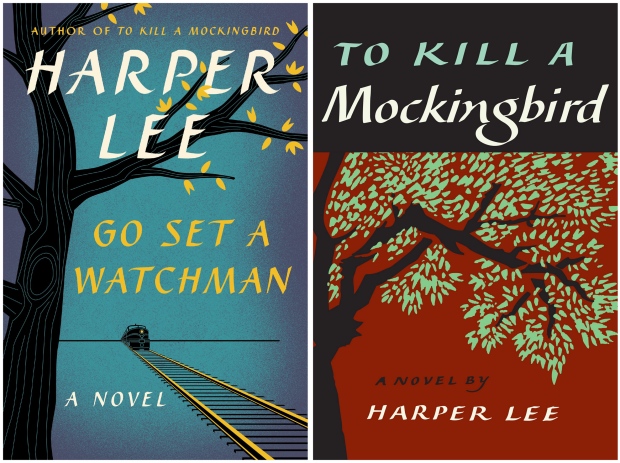
In the late 1950s, a young writer named Harper Lee was sending around her manuscript, which was called Go Set a Watchman. It fell into the hands of a brilliant editor named Tay Hohoff, who thought the book was fine, but it could be much better. In 1960, Harper Lee published what turned out to be one of the great literary classics of all time: To Kill A Mockingbird. This book about a young girl in the South who is affected by racism, civil unrest, and a town divided resonated with readers across America. Now, 55 years later, its themes of what it means to be an outsider, of acceptance or rejection, of race and how the actions of the few can affect the lives of the many, is still being taught in schools, and it was voted the most important book of the 20th century by American librarians.

If you’ve read the book or seen the excellent film with Gregory Peck, you know why it’s important. Atticus Finch is a character who leaps off the pages, even though you won’t find a quieter or more restrained character in the book. Told from the point of view of Scout Finch, we older readers chuckle and giggle at her shenanigans as we look up to her older brother Jem. We love their cook/nanny/housekeeper Calpurnia, but most of all it’s the very famous courtroom scene that resonates. When an African-American man, Tom, is charged with having raped and beaten a white girl, Mayella, who lives down near the town dump, all of Macomb County is in an uproar. There are those who simply assume he did it, while others aren’t so sure. Mayella’s father is an alcoholic who’s made more enemies than friends in this town, but on the other hand, the accused is Black. For some, that’s all it takes to assume he did it.

(Warning: Spoilers for Mockingbird ahead.) Atticus Finch is handed the case by the judge, and asked to defend the accused. He takes the case because he has to. But because he’s an excellent lawyer who believes that everyone deserves the right to a fair trial, he gives the man one. Scout and Jem sneak into the upper balcony where the African-American people sit, and listen to the entire case, unbeknownst to Atticus. Through very careful cross-examination of Mayella and her father, and in a reasonable discussion with Tom, Atticus presents a case that no one could deny: Mayella lured Tom into the house and kissed him, and her father came home, saw it, and beat her senseless and forced her to accuse Tom or he’d kill her. The evidence is undeniable.

Unless, of course, this is the South in the 1930s. In which case Tom is convicted. When the verdict is handed down, Scout and Jem are beside themselves. They can’t believe what they just heard, and they’re enraged at the obvious injustice. Atticus, on the other hand, quietly packs up his bag and walks out of the courtroom. As he does so, the children are tapped on the shoulder and turn to see every African-American person in the balcony standing out of respect for their father.

A lot more happens in the book, but this court case stands at the centre, and is the reason we still read and study this book today. Atticus Finch has been hailed as one of the great heroes of literature, a man who stood up for his beliefs and went against the status quo to try to ensure that a man would be treated as an equal, regardless of the colour of his skin.

Harper Lee never published another book. As the years went on, there were stories of an editor who’d worked heavily on the book with her, and tales that her friend Truman Capote had written large portions of it. She and Capote were very close, and it was said that she equally contributed to his development of his own classic, In Cold Blood.

Then, last year, to the shock of the literary community, HarperCollins announced they had the sequel to To Kill a Mockingbird, a long-lost book that was now coming to light. No sooner did every bibliophile add this new took to their to-read list on Goodreads than the news came out that Harper Lee perhaps wasn’t on board. Reportedly senile and in a nursing home, she was being taken advantage of, reports said, and didn’t want this book to see the light of day. It would be akin to reading someone’s teenage angsty poetry, and no author of the calibre of Harper Lee should be remembered for that. Reportedly her sister had fought tooth and nail to keep the manuscript suppressed, but when she died at the age of 102, there was no one left to fight on behalf of Lee. Enter an unscrupulous lawyer and a money-hungry publisher, said the reports, and you have Go Set a Watchman.

Now I was torn. I really wanted to read more of Harper Lee’s writing, but was the book sanctioned by her? The publisher said yes; the public said no. It was unclear what was true. HarperCollins was touting this as the sequel to Mockingbird, a book set 20 years after the events of the first one, and that we’d see what would happen to the characters. In my excitement on the first day, I’d pre-purchased the book, and then promptly forgot that I’d done so.

Fast-forward to July, when the book came out, and appeared on my doorstep. I didn’t realize I’d ordered the book, and had half a mind to simply return it. Especially now that, in the week before its release, it had come to light through reviewers that the Atticus Finch in this book was actually a racist in his later years, that Scout was flaky, the writing was weak, and this was not the sort of book that fans of Mockingbird would want to read. Not only are the characters disappointing as hell, but there are ENTIRE PASSAGES that are exactly the same as in Mockingbird, said the reports. Who would want to read that?!

But I also discovered something else — this was NOT the sequel to Mockingbird, despite HarperCollins promoting it as such. This was the original manuscript.

Suddenly, this was an entirely different matter. There was no way I was sending the book back now.

And so I read it. And as a book, it’s fine; at times it’s great, and at times it’s lousy, but overall, it’s fine. If this had been Harper Lee’s first foray into fiction, it probably would have done well, and she would have been promptly forgotten. No one would have been studying this book 55 years later.

BUT... as a historical document that sheds new light into one of the greatest books ever written, Go Set a Watchman is perhaps the most important book of the 21st century thus far. Because this is not a sequel — it’s the very book that was handed to Tay Hohoff all those years ago. And when you read it, you can see exactly where To Kill a Mockingbird came from.

Scout returns to Macomb County years after her father had defended a Black man against wrongful rape allegations, and he won the case. But when she goes to town and sees him in a town meeting, where he allows a man to speak shockingly racist things, and seems to back him up, she’s appalled. She can’t believe the very man who’d given her so many values as a child could have turned into this person. And then we get flashbacks to some of those moments of her childhood, with her brother Jem and their friend Dill. After she has it out with her aunt about what she overheard her father saying, she confronts Atticus, and there’s a long section of the book that consists solely of the argument between the two of them, with her offering up every attack against his racism, and him calmly taking those attacks and throwing back something else. Scout comes off as rational, intelligent, sympathetic, and outraged, and Atticus is infuriatingly calm, and in a couple of moments, a little unnerved. I won’t say what ultimately happens, but I will say that when I read the dialogue between the two of them, it seemed like very daring material for a book written by a white women from the South in the 1950s.

And, perhaps, it’s why it wasn’t published. Maybe the world wasn’t quite ready for a book that was that sympathetic to the Civil Rights Movement.

I will warn you now: reading Go Set a Watchman won't always be a pleasant experience. There are moments of abject racism in this book where you'll want to hurl it across the room. And there are moments of outdated sexism that will just make you shake your head. But the thing is, we can't turn away from those moments. Because while the sexism is, as I said, largely outdated, the racism, devastatingly, isn't. There were times in Go Set a Watchman where I couldn't believe how progressive some of Scout's arguments were against her father. And then I had the depressing realization that the only reason they seem progressive is because we're still saying them. 

Reading this book before Mockingbird — and should you take up both of them, I strongly urge you to read Watchman first, and Mockingbird second, because it’s a much richer experience to see the genesis of Mockingbird than to read it as a sequel, which it is not — I could imagine the editor working with Lee. I imagined her reading it and saying look, I really like what you’ve done here, but I think the argument at the end simply isn’t something the publishers will go for. Why don’t we be a little subtler with how we jar their sympathies? See these little moments where we flash back to Scout’s childhood? I have to admit; that’s where your book really comes to life. Why don’t we simply come up with a way to actually go back to that time and recreate the very summer that she spends so much of this book talking about? She keeps referring to an Atticus that’s clearly not the one in these pages: what if you showed us that Atticus, but let’s not make it easy. We’ll paint him as a hero, but let’s have the judge force him to take the case; he’s not just taking it out of the goodness of his heart. And right here, where you say he won the case? What if he presents an irrefutable case and actually loses? Wouldn’t that garner the sympathies of audiences even more? And since this is the story of outsiders, why not have one closer to home? Like maybe a next-door neighbour who never comes out of his house? I want to evoke that voice of childhood: Scout and Jem are children who don’t see black and white, they simply see people. It’s only in the jadedness of adulthood that racism festers and grows. I want the story told from the point of view of a child. Perhaps that might force the audience — without them even realizing that it’s happening — to realize that Scout is right.

And Harper Lee went back to the drawing board and reimagined the entire book. There are stories I’ve heard of Lee going through serious anxiety while working on the book, of throwing the pages out of the window at one point and then calling her editor to tell her what she’d just done, and of her editor ordering her outside to go and pick up all of those pages. She was encouraged, coaxed, and sometimes perhaps forced to get a better story out of what she’d already written. But reading Watchman, you can see the same wit, style, and sense of humour on every page. I don’t believe Capote wrote this book, because the voice of In Cold Blood is very different than the one we get here, and with the exception of whatever editing actually happened at HarperCollins within the past year to get this book to publication, we can assume that most of this book is Lee’s raw manuscript. And there are moments of brilliance in there.

Right before I started reading this book, I saw a review in Entertainment Weekly that gave the book a D+, if I remember correctly, and it said quite simply: don’t read this. If you do it will ruin your experience of To Kill a Mockingbird forever. After having read Go Set a Watchman, I can honestly say that that review is one of the single most irresponsible pieces of journalism I’ve ever had the misfortune to read. Read Go Set a Watchman for a perfect example of a work of fiction that was rejected. Read it to see how much work an author really has to go through to get from Draft A to the finished product. Read it to see just how much input an editor can have in a book. Read it to realize that not everyone can be an author, and the few who do are the ones who have gone through editorial processes like this one. Read it to see how the germ of a great idea may be hidden in a not-so-great one. Read it to see the flashes of brilliance that Lee exhibited even in her unedited first draft. Read it to see what a remarkable writer she really is. Read it to convince yourself that there’s no way Capote wrote To Kill a Mockingbird, and that instead, this book is the result of the sweat and tears of one author, working alongside a very encouraging editor.

And then go read To Kill a Mockingbird. And see what the result of all that work can be. Read it to see that it’s not the cut and dried book people seem to think it is. Read it to see that Atticus isn’t exactly a civil rights hero — he was forced to fight the case, and when he lost he simply walked out of the courthouse and shrugged his shoulders because he’d done the best he could and that was that. Read it to see where the good passages in Go Set a Watchman became exquisite ones in Mockingbird. Read it and marvel at what an extraordinary book it still is, and always will be.

Wednesday, July 09, 2014

My Name Is Nikki Stafford . . . And I Am an Addict


My friends have always ribbed me as the girl with no vices.

I don't drink. I don't drink coffee. I've never even taken a puff from a cigarette. I've never done recreational drugs of any kind. (Seriously, I'm that boring kid at parties.) I don't particularly like ice cream or desserts. I love chocolate, but rarely crave it. I've never bought expensive shoes, and typically find one pair — whether it's a pair of Docs or Clark's — and wear them until the soles are worn off. I don't buy expensive clothes, and prefer jeans and t-shirts. I don't buy expensive handbags: I own a single Coach purse that I bought on sale, and have had it for four years and will no doubt wear it for another 10. Until I got that, I'd used the same $10 Old Navy purse for over a decade. I don't wear jewelry, though occasionally I'll find something really unique and I'll buy it, but it's never more than $50. And we're talking one of those a year. Maybe. I'm constantly joking with my husband that he doesn't know how good he's got it: those credit card bills of ours contain zero extravagances for me.

Well, except for one itty bitty thing...

Back in December, I announced here that I would stop buying books for one year. I acknowledged I had a problem, and I was going to stop buying them by the dozen (no really, I buy armloads at a time) and actually read the hundreds — hundreds — of unread books that surround me on my dozen bookshelves. My house is a library, where there isn't a single room without a book in it. My kitchen is full of cookbooks (which I actually read like novels), as is the pantry in my dining room. My side table beside the bed has so many stacks of books on it that, as I joked to a friend last week, I knock a book off every morning when I try to hit the alarm's Snooze button — because of spending five years taking English lit at university, I got so used to reading several books at once that I still do it. My kids have several bookshelves in each of their rooms. The bathrooms are filled with magazines. The family room and living room have shelves of books. Even the guest bedroom, music room, exercise room and storage spaces have books shoved into every free space. And my office has so many books that every shelf is filled, more books are shoved into the free space on top of the books, the tops of the shelves have books, they're stacked on the floors, and that one shelf where I have put all my Buffy figures? I now eye it daily and think, "OK, Spike, you've fallen off that stand so many times that I should just sweep all of you guys into a bag and use this shelf for BOOKS." But I haven't gotten there yet.

I've read a ton of them. Every shelf probably has 10-15 books on it that I've actually read. But that leaves another 10-15 that I haven't. And that is A LOT.

And so, I decided I wouldn't buy books this year. Nor would I take any out of the library. I was going to make a concerted effort to read what was on my shelves, and see if I could match the 55 books I managed to read last year.

Then I started making exceptions, and that's where addictions always fall apart. I belong to two book clubs (sometimes three), and I said whatever books they chose, I'd buy/get from the library so I could keep up. But that's 24 books right there. Already I'd put a major dent in my Year of Reading From My Own Shelves.

Then, on December 31, I placed an order for 10 books, books that I'd wanted for some time, but now that I'd put a one-year moratorium on my book-buying, I needed them NOW. So after deciding I needed to read some of the hundreds of books on my shelf, I was already up to 10 new ones, and 24 other ones that I'd have to buy/borrow. That left only about 20 that I could read from my own collection. Not even one shelf's worth.

And then, in February, my children's school had a book sale to raise money for their library. The kids begged me to take them there after school, and they looked over the books and I told them they could take what they wanted (I've never put a limit on books). $1 for a paperback, $2 for a hardcover. And that's when I saw JK Rowling's Cuckoo's Calling on a table in mint condition. Wait, $2 for a brand new book? That's amazing! Without even thinking, I put it into the stack of books the kids had chosen and went up to pay for them. It's only as I handed over my money my heart suddenly jolted and I realized, Wait... I can't buy any books!! Oh no... oh no... So I decided I will give this one to my husband. Yes, that's the ticket! I can still give books as gifts, yes? And if it just happens to still be on my shelf next year, why then yes, I can read it. Whew. Crisis averted.

Then my birthday happened. And someone gave me an Indigo bookstore gift card. They were barely out the door before I raced to my computer, heart pounding with excitement, and began filling up my cart. Ooh... I went over the amount. Ah well, it's my birthday, right? I felt my heart beat faster, and my stomach was doing flip-flops of excitement. Two days later the books arrived and I grabbed them excitedly from the mailbox, ripped open the box and smelled them. They smelled WONDERFUL. (This is why I've yet to switch to a Kobo...)

Two weeks later two of the books that I'd worked on as an editor arrived in the mail: Wanna Cook, the Breaking Bad companion guide by Dale Guffey and Ensley Guffey, and Elephant in the Sky by Heather Clark (both astoundingly good books, by the way!) Just seeing a book-shaped package gave me shivers of excitement, and I could barely contain myself as I ripped the package open and handled them for the first time. Shortly after, one of my book clubs had their monthly meeting in a bookstore. I saw books that I wanted so desperately — OMG, so-and-so has a new book?! — but knew I couldn't have them.

And on the way home, I realized no, I can't do this. In fact, I'd more than proven already that I hadn't done this at all. I'd failed miserably. My moratorium on books had lasted all of six weeks before I'd fallen off the wagon, and then when someone gave me a gift I was like an addict.

And that was when I realized something even bigger: I'd always joked that I was addicted to buying books, but I really was. The way alcohol or caffeine or drugs give people a high that they can't get from anything else, that's how I feel when I buy books. There's so much possibility between those covers, so many worlds and new people to meet and adventures to be had. If I choose my books wisely, I'll be introduced to new ways of thinking and new ideas that I'll be mulling over for weeks, months, even years.

So I gave up. I decided no, I'm not wasting a year of my life not doing one of the things I love most. I have friends who are in serious credit card debts over shoe purchases or expensive clothes-buying binges, and that's not me. Books are relatively cheap, and they are WONDERFUL.

I love reading books. But I discovered that I might enjoy discovering and buying them even more. I literally have physical changes when I'm in the midst of purchasing a book: my heart really does race, my stomach gets fluttery. I have a buzz and feel overwhelmed with joy. The smell and look of a bookstore makes me so happy. A couple of weeks ago I was in an independent bookstore in San Francisco with my best friend Sue (who also tried the year-long moratorium and failed equally spectacularly) and it made me realize how much I love and long for independent bookstores. I'll go to a Chapters/Indigo long before I'll buy something on Amazon, but the fluorescent lights and overwhelming smell of Starbucks and warehouse-like look of the place is no match for the soft lighting, smell of old paper, occasional creaky floors, and hand-selling that happens at an independent. The one I found in SF was called Booksmith's, in the heart of the Haight-Ashbury district, and I spent SO much time in there reading the dozens and dozens of cards they'd carefully placed under all their favourite books (not just New Releases but everywhere throughout the store) and was madly writing down titles of books that intrigued me, knowing I couldn't carry every single one of them back to the hotel. I went up to the owner of the store and told him how much I adored his place, and he seemed genuinely thrilled to hear it. I chose a single book by Maud Casey as my prize (based on the card that recommended it), and felt that rise in pulse as I handed over my money for it. After I got home I looked up the store online and discovered there was a whole wealth of bookstores in SF, and maybe I need to make a trip there where I do nothing but shop in bookstores the entire time. Hm... I might actually go into cardiac arrest if I did that...

Many addictions are bad. Whether it's hard drugs or alcohol that have destroyed lives and families, or shopping sprees or gambling addictions that have crippled people financially, or eating disorders that threaten the lives of their victims, we tend to look at the nature of addiction as something uncontrollable and evil, filled with hurt and pain. I've had many friends fight addictions for years, and while not all of them were able to overcome their demons, I'm happy to say many of them have recovered and are leading extraordinary lives now.

I saw my book-buying addiction (and the physical changes, sense of compulsion, and overwhelming high that accompanies it would suggest it is, in fact, an addiction) as something that I needed to curb, that I needed to stop so I could focus on the glorious worlds that currently exist on my bookshelves. But I've come to terms with the fact that I'll never live long enough to read many of the books I currently own, and that I can't stop buying new ones. I can let go, though — when we moved the last time, I probably got rid of 100 books (which I offered up to friends first) — so it's not like a person would come to my house and be tripping over books wherever they go. There is an order to my chaos.

But I love bringing new books home. I love discovering the worlds that exist within them, even if I never actually get to live in those worlds. And when I'm in the midst of a good book — like the one I'm reading right now, actually — it's hard to concentrate on doing much else because all I want to do is read that book. I've always been that person watching prison dramas and thinking, "You know, if I was put into solitary confinement for a year, imagine all the reading I could get done!!!"

So I don't need to curb my addiction. I don't need to curb that thrill of buying new books. I don't need to stop discovering new books. I've never gotten a credit card bill with a book-buying charge on it that was so high my husband's eyes bugged out of his head. He spent more money fixing and rewiring his guitars last month than I've spent all year on books. In fact, the one good thing that came out of the moratorium was that I gained a whole new appreciation for how much I love buying and reading books. I always said I loved it, but now I truly know that it's an essential part of who I am.

In fact, for the first time, yesterday I popped into Chapters online and ordered Rainbow Rowell's new book on the day of its release. (And then had that very 21st-century impatient feeling of, "Geez, I wish they could ship it to arrive RIGHT NOW" about two minutes later...)

And it was so damned exciting.

Tuesday, February 11, 2014

Addicted to Books! January Edition


Just to recap, this year my friend Sue and I decided we'd try just reading books on our own shelves (since we have piles of unread books throughout our houses), to try to curb our serious book-buying obsessions, making exceptions only for book club picks. One friend of mine told me I'm basically shooting myself in the foot for announcing that I'm doing this, since not only am I a writer who depends on people buying my books, but I'm an editor at a book publishing house who edits books I hope people will buy. And she's absolutely right. So I will reiterate that we're doing this, but we don't advocate others doing it. Instead, we hope that we can come up with some book ideas so you can go out and buy a book in our honour. And then tell us about it so we can live through your book buying vicariously. Sigh. 

Nikki: Hey Sue! So. We're one month in to not buying books and I'm starting to think this was a really bad idea. On the one hand, I always say I'm a book-buying addict: I get a rush walking into a bookstore and walking back out with 12 books in my arms, but then a few hours later I start to feel guilty, realizing I have hundreds — HUNDREDS — of books on my shelves that I've yet to actually read, and the more I buy, the fewer I'll actually have time to read. But now that I've cut myself off, going cold turkey (after, I'll admit, ordering a total of 10 books on December 31st that arrived in a giant glorious box at my home on January 4) I feel ill going near bookstores. I used to feel SUCH a rush going into Costco and gunning it to the book aisle. Or deciding to spend some time browsing in Chapters or at LA Mood, a comic book store in downtown London. Or stepping into a used bookstore just for that wonderful smell. There's this feeling of butterflies in my stomach, excited anticipation of what I'm going to find and what goodies I'm going to bring home. And the first time I went into a Costco in January and rushed to the book aisle… I suddenly realized that it doesn't matter if I find something amazing: I CAN'T BUY IT. And the letdown was huge. Why the hell does one bother going to Costco? I only buy the three pounds of paprika because I know I can sneak over to the book aisle in between the "necessities." I haven't even bothered to venture into a Chapters. I will admit I've found myself browsing Chapters online, or Amazon, but knowing I can't put anything into that cart gets me down in the dumps. And I did manage to go into LA Mood, but left pretty quickly after watching the rest of our Graphic Novel group buying books and realizing I can't do the same. UGH. And I haven't even gotten started on reading book reviews in magazines and newspapers, realizing that some book sounds SO GOOD and I can't read it until 2015. 

Killing. Me. 

So before we get into the actual books, how has the experience of NOT buying books been for you? Are you having as much trouble as I am? Or am I just the far worse addict? 

Sue: I have to admit that at first I thought it was going to be horrible. I remember you telling me about your very full cart on Amazon at the end of December and I panicked a little because I wasn’t up to date on my EWs and therefore wasn’t sure what other books were coming out or being recommended that I may miss if I didn’t get up to date.  I think that I bought 4 books before the end of the year and I was quite happy with those.  I’m lucky in a way as I don’t have a Costco membership so I don’t have to worry about that temptation because I would also find that very, very difficult.  I also think that the only other thing saving me at the moment from going through major book buying withdrawal is the fact that after Christmas I am so sick of shopping that I don’t feel the need to go and buy, buy, buy at Chapters. I usually start off my new year by reading quite a lot of books as I feel my social calendar is a little less demanding and I get more time to read (especially this year since the weather has been so bad – there’s nothing better than “hibernating” with a good book).  I have a feeling that I may have more difficulty not buying books when spring comes around and new books are everywhere and I’m out and about more and ready to shop again – that’s when I’m going to have a struggle on my hands. So far I am very, very happy and satisfied with the books I’ve been reading from my own shelves so perhaps that has also made the resolution not to buy books a bit easier. It’s also nice to have a feeling of satisfaction because I’m finally reading what I’ve collected over the years. I had made a list of all of my unread books before the end of the year and realized that I had many more than I had thought which to be honest felt a little gluttonous and also induced a little bit of stress. With every book I pull off my shelf and read those feelings are lessening! I’m enjoying the process of remembering why I bought these books to read in the first place which is really making it a lovely adventure!

That said, if we were ever to venture out to a bookstore together all bets would be off and we’d both be in MAJOR trouble so part of my survival is also not hanging out with you in bookstores!! Heehee

Nikki: Ha! That is SO TRUE. We really are our own worst enemies when it comes to book buying together. I still remember years ago the two of us going into downtown Toronto and we put two hours of parking in the meter, and then two and a HALF hours later we left the bookstore, each with two full bags of books, and had to run as fast as we could back to the car, which was sans ticket!! We felt extremely lucky that day, but then had to deal with my husband and your roommate ribbing us about how many books we'd purchased. It was like we'd spent an afternoon in a crackhouse and had come out completely stoned with bags of the stuff hanging out of our pockets. 

I agree that this weather is certainly perfect for reading. And so let's get into what we actually read! We've decided to talk about not just the books, but how we acquired each of the books. 

I read five books in January. I’ll write shorter reviews here because my longer ones are on my Goodreads page (come friend me!): 

The Rosie Project by Graeme Simsion: This had been recommended to me by so many people, and then my friend Chris Meades (author of the brilliant Three Fates of Henrik Nordmark and brillianter The Last Hiccup) sent me his copy for Christmas, so it was officially a book I owned! And while I wasn't so sure of it in the beginning — the humour is derived from chortling at a guy with Asperger's — you soon realize that you're not laughing AT him, but with him, and it's a book that truly opens up your mind to what Asperger's is and how all of us are able to change our strict mindset given enough provocation. I really enjoyed it and it had many laugh-out-loud moments. 

Saga volume 2 by Brian K. Vaughan: I'm a huge BKV fan and had read the first volume of Saga before Christmas, and so this was in my big box of 10 books because I couldn’t wait to get the next one (vol 3 is in July: WHAT WILL I DO?!) and I LOVED it. This is such a great Romeo and Juliet type of story of two people from different worlds at war who come together and create a new hybrid life, and then immediately have to do whatever it takes to protect their new baby. Brilliant. And the illustrations are stunning. 

Pride of Baghdad by BKV: Because I was going to the Graphic Novel book club this month and wanted to pitch a BKV month (and they accepted!) I reread Pride of Baghdad. This was recommended to me by several Lost fans after Y: The Last Man became a key book on that series, and I bought it in . It's a one-off story of what happened in 2003 when a pride of lions escaped the Baghdad Zoo during a US air strike. Gorgeous and devastating. 

Linden Hills by Gloria Naylor: When I was doing my undergrad in English lit, one of my profs was offering a seminar course on African-American Women's Lit, but it was at exactly the same time as a Virginia Woolf course I had my heart set on, and I was devastated. I went with Woolf, and my prof was kind enough to give me the list of books on his curriculum. One of them was Mama Day by Gloria Naylor, whom he told me was his favourite author. So I read it and it was glorious. I've read it twice since, along with all of her other books (including Bailey's Café and The Women of Brewster Place). Her writing style is sublime, every sentence is like a poem, and I bought Linden Hills in the City Lights used bookstore (where I spent most of my off-time during university; seriously, 80% of my used books have the scrawled pencilled-in price with the CL under it on the front inside page) probably in 1995, and never read it. It travelled with me to do my grad work, then my first apartment, second apartment, first house, second house, and now third. And since it was the last book of hers I had to read, I finally sat down and read it. And doing so reminded me why we're doing this. SUCH a good book it made me want to pick up all of her other books and reread them. It's dark and dreary, I'll admit, and made for some depressing moments throughout the reading process, but it's SO beautifully written. I highly recommend this to anyone who loves great literature. 

Let's Explore Diabetes with Owls by David Sedaris: To offset the dreariness of Linden Hills I picked up Sedaris's book to read alongside it. I've read everything by Sedaris and there's always a handful of essays that make me laugh out loud, reading passages aloud to my husband, and this was no exception. There's a chapter where he talks about language CDs and learning to speak new languages so he can test them out in foreign countries that is screamingly hilarious, where others were more poignant. He included a few fiction pieces, but I much prefer the non-fiction. I picked up this book last year (from Costco no less!) and unlike his other books, didn't read it immediately. It was great. 

Next month I'm hoping to hit some older books on my shelves. Where you found dozens, I literally have hundreds. Blergh. 

And how about you, what did you read this month?

Sue: Ah, I love our adventures!!

I read 5 books in January:

A Spot of Bother by Mark Haddon: I had bought this book in hardcover when it was released as it was Haddon’s first book after The Curious Incident of the Dog in the Night-Time (a book which I absolutely adored).  A Spot of Bother focuses on an older British couple (husband is retired and wife is semi-retired) and their grown-up children (gay son and relationship-challenged daughter). The husband begins having anxiety attacks and also begins imagining that a spot of eczema he’s noticed on his stomach is actually cancer. The whole notion of him having cancer debilitates him and things spin quickly out of control for him. The wife is having an affair with an old work colleague of her husband’s. The gay son has moved away from home and is having relationship issues of his own as he’s afraid to commit and introduce his boyfriend to his parents. The daughter is trying to decide if the man she’s marrying is due to his ease of dealing with her out of control son (from a previous failed marriage) or due to the fact that she does truly love him. The book was very funny and also very emotional. I loved way the story built up to one absolutely horrific day where the family is all together and everything goes wrong but turns out right in the end. Interesting comment on how family members can easily drift away from each other and not really know each other very well at all.

Ox-Tales Earth: This was a book of short stories released by Oxfam in 2009. I picked this book up at WH Smiths in a train station in England (my train stub was still in the front of the book). It was one of 4 books of short stories released to raise money for Oxfam (the others being Air, Water and Fire). Each of the compilations contained short stories from well-known authors who donated their stories to the collections. Some of the authors who contributed to this volume were Kate Atkinson, Ian Rankin, Hanif Kureishi, Nicholas Shakespeare and Jonathan Coe. I really enjoyed these stories which ranged from a station master in rural Russia hiding a dying Leo Tolstoy from his wife, a white South African woman fighting to keep her love for her native country despite the current regime which was persecuting legitimate white land owners and the lengths she goes to in order to defend her love, a Rebus story from Rankin of exactly 200 words, a story about a man trying to regain his youth and the story of a young boy with autism and how his mother struggles with wishes of him enjoying the simple things in life. I wish now in retrospect I had read this book sooner and bought the other 3 editions because I believe I would have enjoyed them as much as I did this one however I can’t find them online anywhere. This is the downside to waiting 5 years to read a book!

Wicked by Gregory Maguire: I picked up this book in a used bookstore many years ago prior to reading Confessions of an Ugly Stepsister by Maguire in my book club. I bought it on the recommendation of so many people. I bought it before I read and disliked Confessions of an Ugly Stepsister and it has taken me at least 10 years to summon the strength and interest to read Wicked. This must be a good book though, right?  It’s been a major hit on Broadway.  I think my initial disinterest of the book was the fact that it was related to The Wizard of Oz. I have seen many clips of the movie over the years but the few times I sat as a child to watch the movie on t.v. I was either terrified or bored. I had to actually read the synapsis of The Wizard of Oz so that I would have the background to read Wicked. I did find the premise of Wicked interesting – to hear the other side of the story of the Wicked Witch of the West and figure out why she did what she did and why she was who she was.  I enjoyed parts of the book but on the whole found that I wasn’t very interest in the story of Elphaba at least not until she was at school but that quickly passed and I found that her early years and later years weren’t overly satisfying story material for me. I found that the politics usually overshadowed finding out who Elphaba really was on the inside. I found it hard at times to pick up the book and keep reading.  Perhaps it was the fact that I didn’t have that childhood link to Oz. I’m not sure. In the end this is not a book that I would recommend.

The Secret History by Donna Tartt:  Years ago I was part of a cyber-chat book club started by Nikki which was done by instant messaging (goodness how old am I?) and I believe this was one of the books picked that I had bought but didn’t end up reading. Tartt’s new book, The Goldfinch, was recently released and has been much talked about lately. In recent articles I read that she releases a book every 10 years and I thought that I really should read some of her work. I am glad that I did. It was a very interesting study into human nature and human relationships. It was very well written and while a hefty read it was an engaging one. The story felt incredibly cinematic though I don’t believe it’s been adapted to film. I was very curious to find out how it would all end since there was an element of mystery and intrigue to the story and I am happy to say that I was not disappointed. I will definitely read more Donna Tartt in the future.

The Almost Moon by Alice Sebold: Alice Sebold is most well-known for her novel The Lovely Bones which I loved. Funnily enough I found this book in hardcover at a dollar store for $2.00 a couple of years ago and thought that I couldn’t pass it up. The story is about a daughter committing a horrific act which then forces her to look back on her very tumultuous love/hate relationship with her mother and the resulting ups and downs in her own life from childhood to adulthood. I found this book very thought provoking and also heartbreaking. I don’t know if at the end I agree with the daughter’s decision but I do sympathize with her. I think this would be a very interesting book to discuss in a book club. 

Nikki: Just a quick response to the Ox-Tales book, but I did see them all for sale still on Amazon, so you could pick them up there. Next year, of course. ;) And also, I’d almost forgotten about that cyber book club we had! That was probably 10 years ago now, and we did it all in a chatroom every month. I did it because I had friends spread out everywhere in the country, and it was a great way for everyone to come together to discuss books. ;)

Looks like we're both off to a great start!! My final question for this month: was there a book you saw listed anywhere that you wished you could buy right away and read? (I know we're going to see these every month so I thought it would be fun to document them… and then next year let's go on a shopping spree on January 2.) ;) For me, it's a book I read about in Entertainment Weekly called A Star for Mrs. Blake, about five American mothers who travel to France to see the graves of their sons, who died in WWI. I almost cheated and bought it, but I held off. (But I'm hyperventilating just writing about it.) 

Was there one that you saw that you wished you could have bought? 

Sue: At our January book club meeting while we were picking books for the year, a fellow member pointed out a book because of its colourful and interesting cover (and I am hoping that it does become a 2014 book club pick). I was drawn to looking at the book again this past weekend when I visited Chapters.  It’s called A Tale for the Time Being by Ruth Ozeki. In Tokyo, a sixteen-year-old teenager attempts to escape loneliness and bullying by writing a journal telling her great grandmother’s story (a Buddhist nun who lived 100 years) and a woman on an island in the Pacific finds a washed up lunchbox containing various items which she believes to be debris from the 2011 tsunami.  I’m intrigued to find out if/how their stories and fates become intertwined. I have to admit that I did have this book in my hands…but I resisted the temptation to buy.

Nikki: Wow, we are being so good. But for everyone else reading this, I hope we’ve given you some ideas and that you rush out and buy a book in our name! And also, I should confess that we’re already discussing that perhaps after a certain number of months, we reward ourselves by buying a book. Or five. 

See you all next month!